
Bernard Schottlander described himself as a designer for interiors and a sculptor for exteriors, which is about as tidy a job description as anyone in this trade has managed.
He reached both by an unlikely route. Born in Mainz, Germany, in 1924, he arrived in England in 1939 and spent the war as a welder in structural engineering, learning at first hand what steel will and will not tolerate. Evening classes in sculpture followed, then industrial design at the Central School of Arts and Crafts in London from 1949 to 1951. In the year he graduated, he designed a lamp. Most graduates leave college with a portfolio and a degree. Schottlander left with a product that is still in production seventy-five years later.
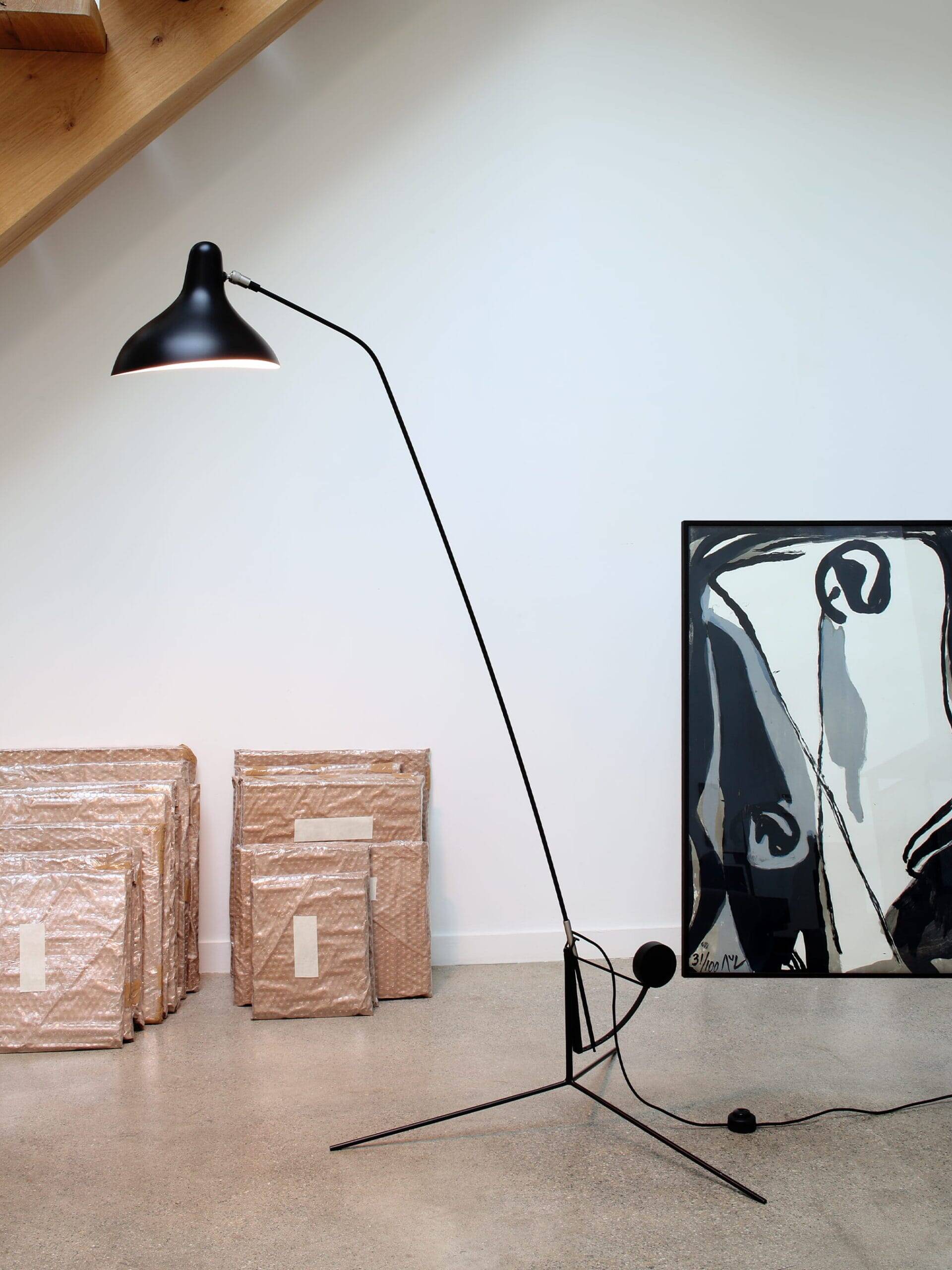
The lamp is Mantis and it has never hidden its debt. Schottlander admired the work of the American sculptor Alexander Calder, whose kinetic sculptures hang in a permanent, unhurried negotiation with gravity. Mantis might be described as a collection of lights persuaded to sit still. The shade rides out on a slender steel arm, kept in place by a counterweight. There are no clamps, no springs, and nothing needs tightening. The rods are the former welder’s lessons put into practice: thin enough to flex, strong enough to hold. It is balance exemplified.
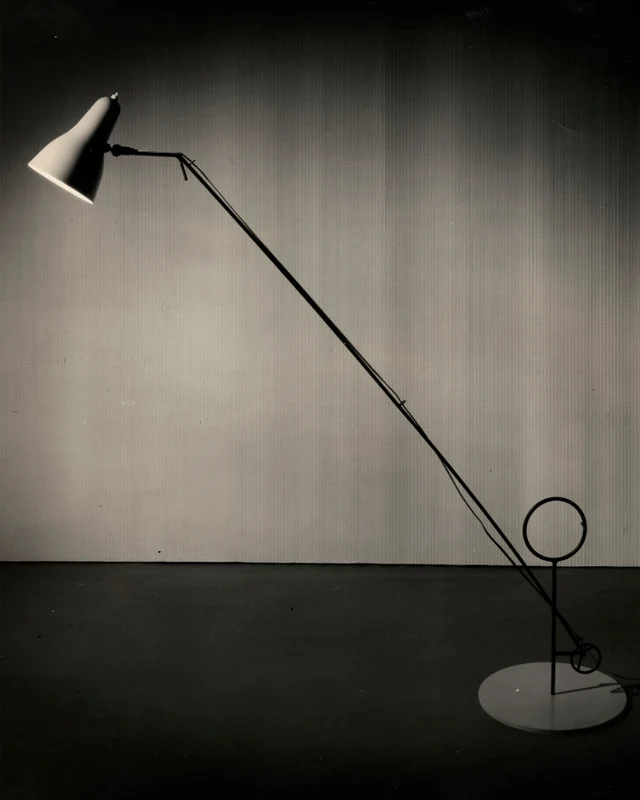
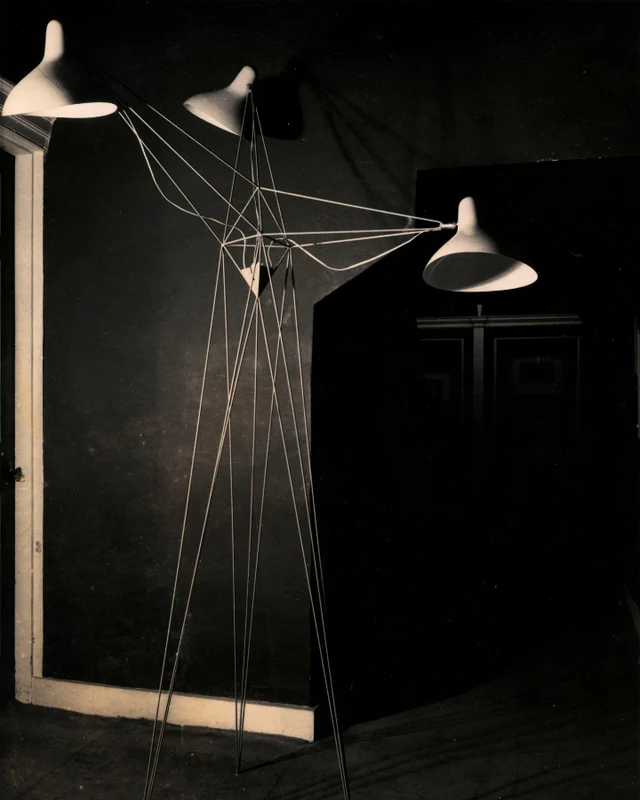
Schottlander’s work was fundamentally rooted in the study of movement. For Mantis, he developed an ingenious pivot-and-counterweight mechanism combined with slender steel rods that are at once flexible, resilient and, remarkably strong. From this dialogue between tension and balance emerged a family of luminaires that appear to defy gravity, frozen in a gesture that feels almost animal-like poised somewhere between sculpture and everyday object.
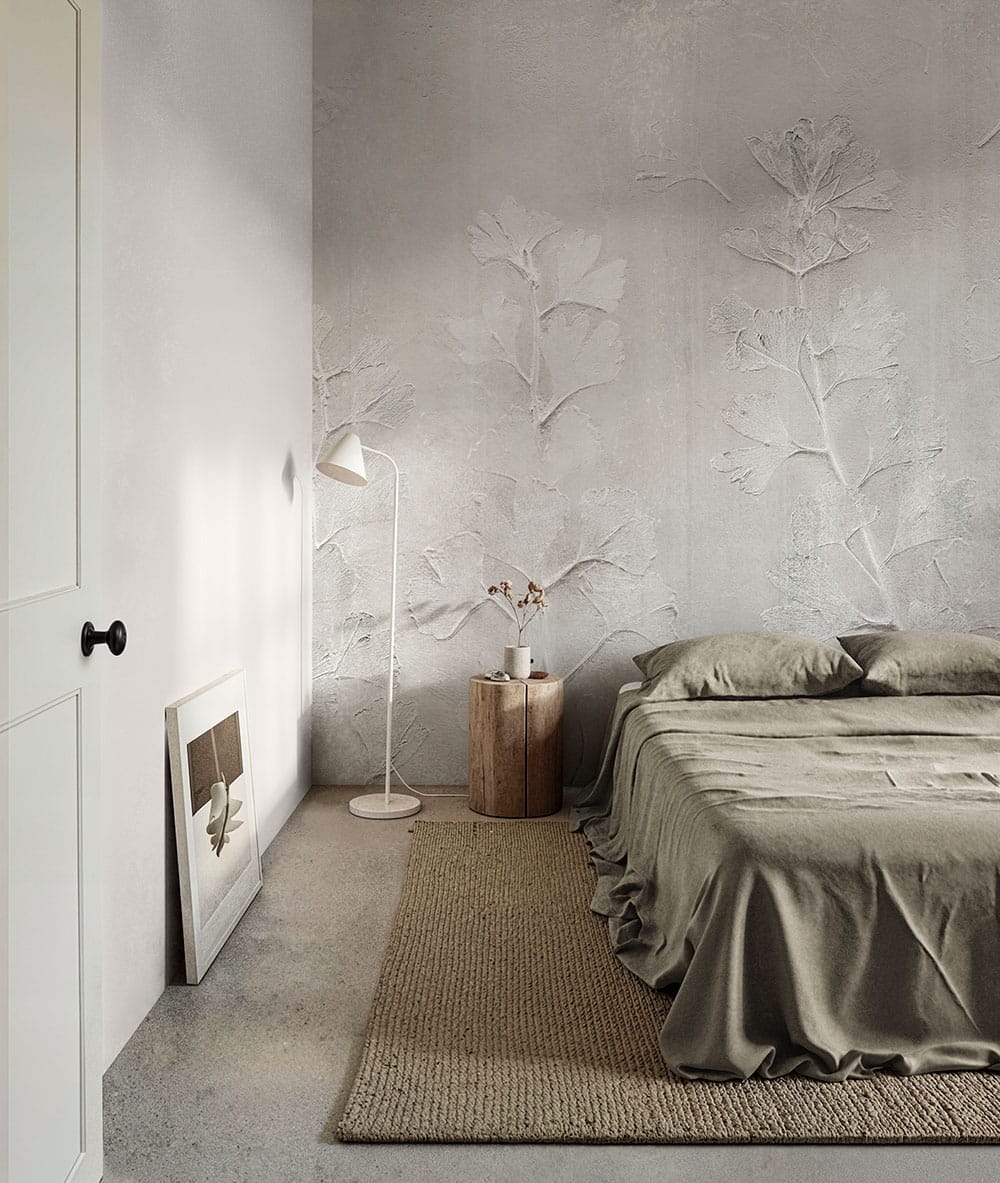
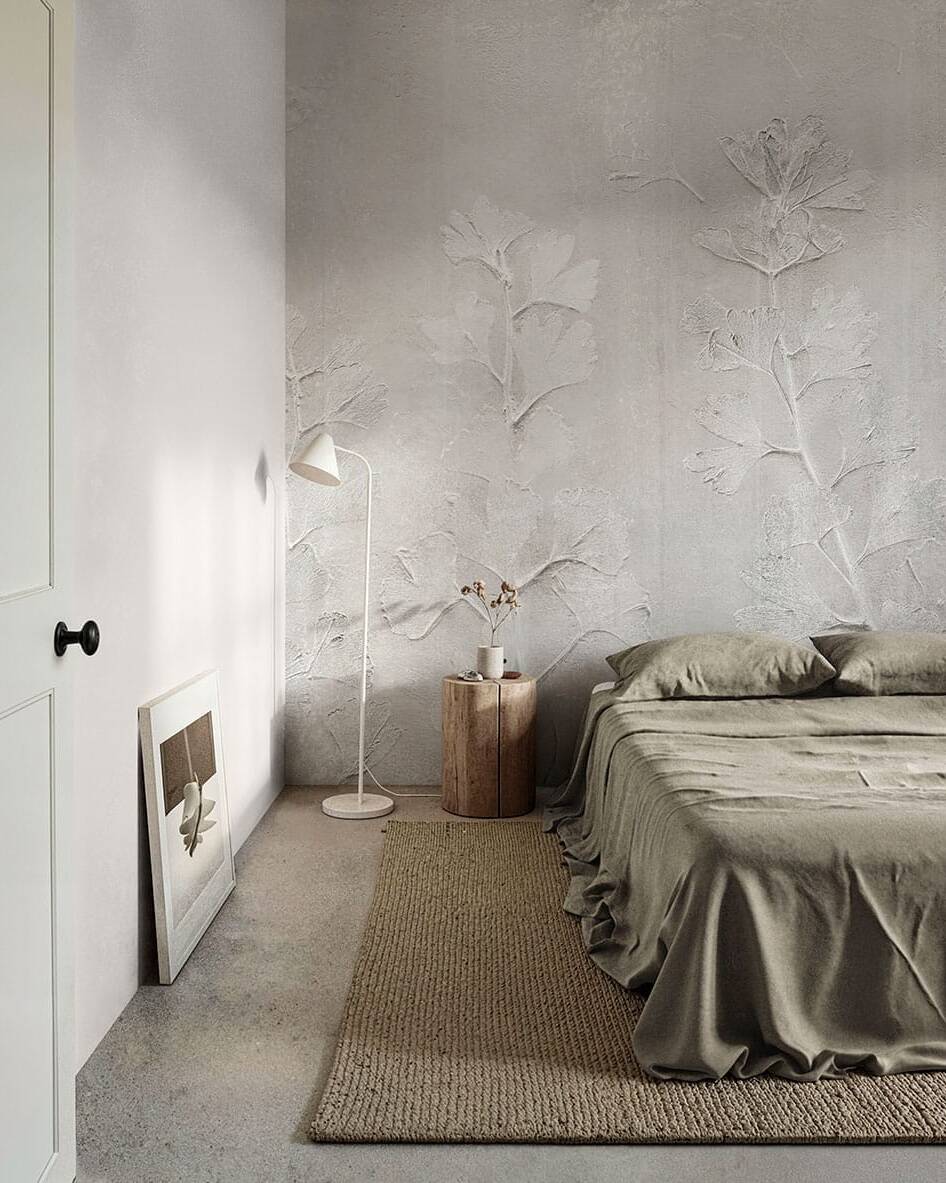
Consider the briefs it answers. A reading corner with no room for a side table. A bed against a wall, where the client wants light over the pillow and nothing on the floor.
A lamp held in place by a counterweight has no friction joint to work loose; the shade is moved by hand and stays where it is put. The collection is eminently versatile. Floor lamps feature the BS1, with a tripod, the round-based BS1 B, and the taller, more upright BS8. On the wall, the BS2 reaches about a metre and a half into the room, and the BS5 does the same job in about 45 centimetres for corridors and bedsides. Both come as Minis. The BS5 SW drops the cable and base switch so it can be wired straight into the wall, an option that saves the electrician a lot of work and the client a dangling flex.
Schottlander built his lamps in a North London workshop with his assistant George Nash, who had learned his trade in the workshops of the Royal Air Force. The lineage shows: light structures, honest joints, nothing ornamental. The reflector is spun aluminium, shaped – as DCW put it – with a sculptor’s eye into a helical twist where symmetry pulls against asymmetry. DCW éditions have reissued Mantis in steel and aluminium, faithful to the original, and sum up their promise as the artist’s boldness joined to the engineer’s precision.
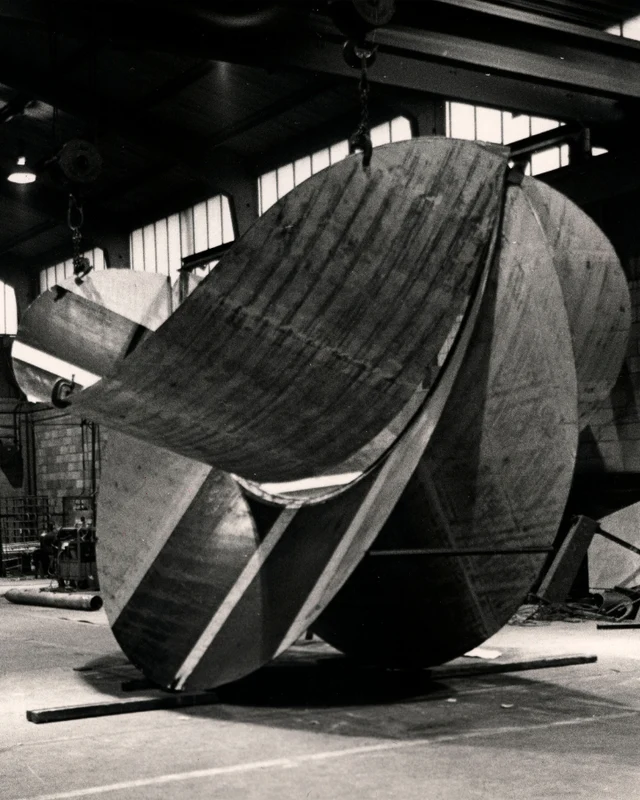
Sculpture by Bernard Schottlander
In 1963 Schottlander gave up industrial design to work on sculpture alone and the pieces that followed grew too large for any room: steel forms set outside universities and in public gardens. To mark the 75th anniversary of Mantis, DCW is opening images from Schottlander’s personal archives where the lamps sit beside his sculptures as obvious siblings. Seen together, the point is hard to miss. Mantis was never a designer’s lamp that a sculptor happened to make. It was the one piece of his sculpture that came indoors, and stayed there.
The Nordic case for specification almost makes itself. This is a market that reads by lamplight from October to March, often in the same chair, and a light you move rather than replace earns its place over a long winter. Mantis asks nothing of a room except a little space to lean into. Seventy-five years on, it is still exactly where Schottlander put it.