

Danish design was intended to be functional. But somewhere in the last sixty years, a Danish chair became something to be inherited, insured, and only occasionally sat on.
Stand at an auction preview in Copenhagen for long enough and you will find that particular kind of chair. Teak, honest joinery, no pretensions whatsoever. There will be a small crowd gathered round it. Essentially, the chair has not changed since the day it left the factory in 1962. What has changed is everything surrounding it: the estimated value, the condition report, the catalogue description, the buyer who will almost certainly not sit on it. The golden age of Danish design was never about exclusivity; it was about good things made properly, in quantity, at prices a teacher or a nurse could afford. However, our Danish chair ended up in a museum, and became unaffordable.
Oxdenmarq’s Dennis Marquart puts it more bluntly. Back in the sixties, he says, a great many of the now-famous Danish design products were affordable for the middle class. That is sadly no longer the case. It is an unusual thing for a furniture maker to say aloud since scarcity is rather good for business, and it is the reason Oxdenmarq exists at all. He founded the brand in 2003 with a deliberately awkward brief: reasonably priced furniture made from exclusive materials, beginning with vegetable-tanned saddle leather. The name of the brand is the whole argument compressed into two syllables. OX is a tribute to the leather, and to the animal that supplied it. DENMARQ is the country and the founder at the same time.
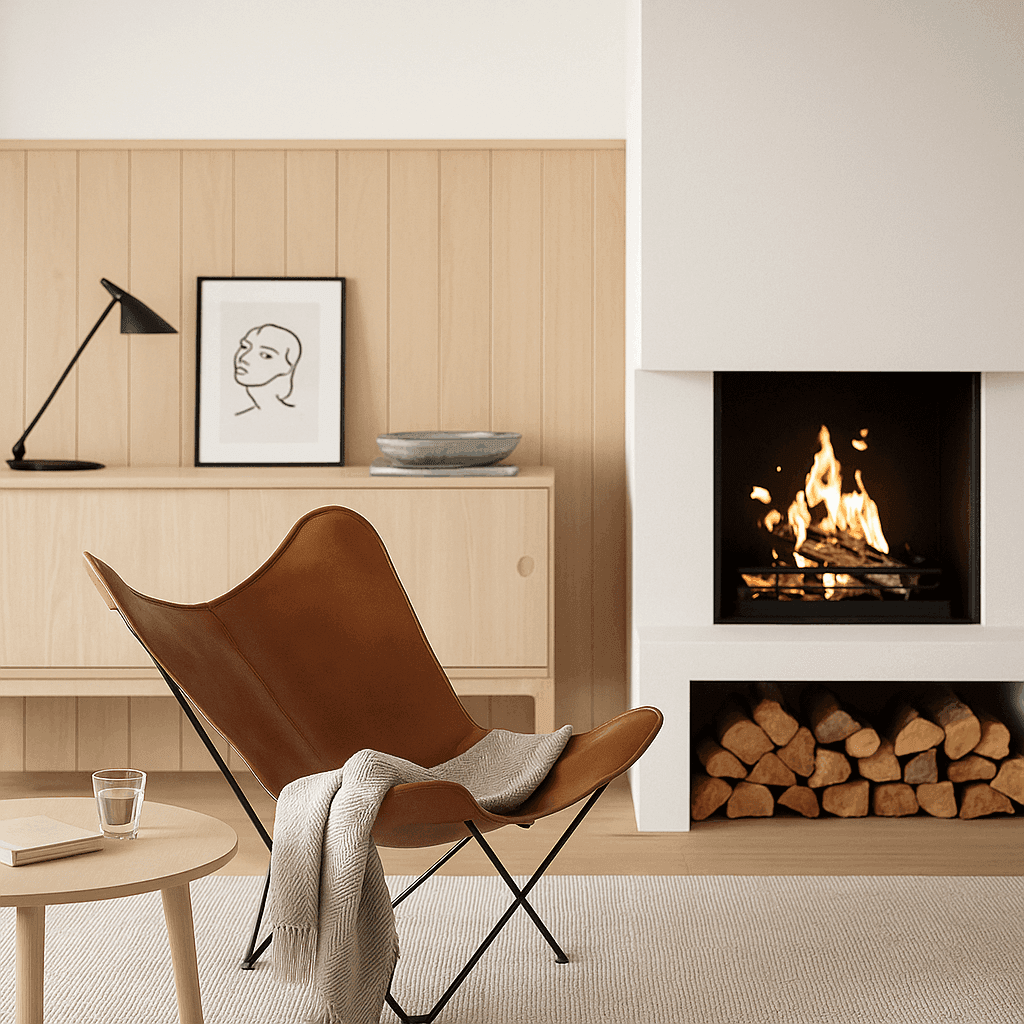
The KS features full-grain, vegetable-tanned hide slung on a frame of stainless or black powder-coated steel. It’s available in four leather colours and two frame finishes.
Oxdenmarq’s commitment has not wavered. Its KS Chair, the most recognisable of its lounge pieces, starts at a little over NOK 11,000. The KS features full-grain, vegetable-tanned hide slung on a frame of stainless or black powder-coated steel. It’s available in four leather colours and two frame finishes. Its silhouette has aged rather better than most things designed in the same decade. And it’s one of an extensive range that also covers dining chairs, stools, benches, tables and sideboards. All of them share a common language of leather, steel, marble and solid oak. For a boutique hotel or a workplace scheme that has to extend from the lobby to the meeting room without switching accent, this consistency is worth considerably more than any single flagship design piece. Oxdenmarq treats customisation as a normal requirement, not a favour.
Oxdenmarqs’ workshop is at Vejby, north of Copenhagen, in the sort of low industrial building that gives nothing away from the road. Marquart trained as a blacksmith before retraining as a designer, and once you know that, you cannot unsee it: steel does the structural work in almost everything, and he still builds the prototypes with his own hands, because it’s the only reliable way to see whether an idea survives being welded. At a time when most Danish brands have farmed out production to low-wage countries, all Oxdenmarqs cutting, bending, drilling, grinding and assembly happen in its own workshop.
The materials get the same close attention. Leather is vegetable tanned and sourced, from Spanish cattle that spend their lives in fields rather than stalls. Which is why you will see insect bites and old scarring exactly where nature put them. Colour varies from batch to batch depending on season, region and the age of the animal, which is worth considering before ordering in bulk. Tabletops and the marble pieces feature five finishes of stone: Green Indio, White Carrara, Brown Emperador, Grey Marble and Black Marquina, quarried in India, Italy and Spain and worked in a village north of Madrid. Suppliers are EU-only, by written policy rather than good intention.
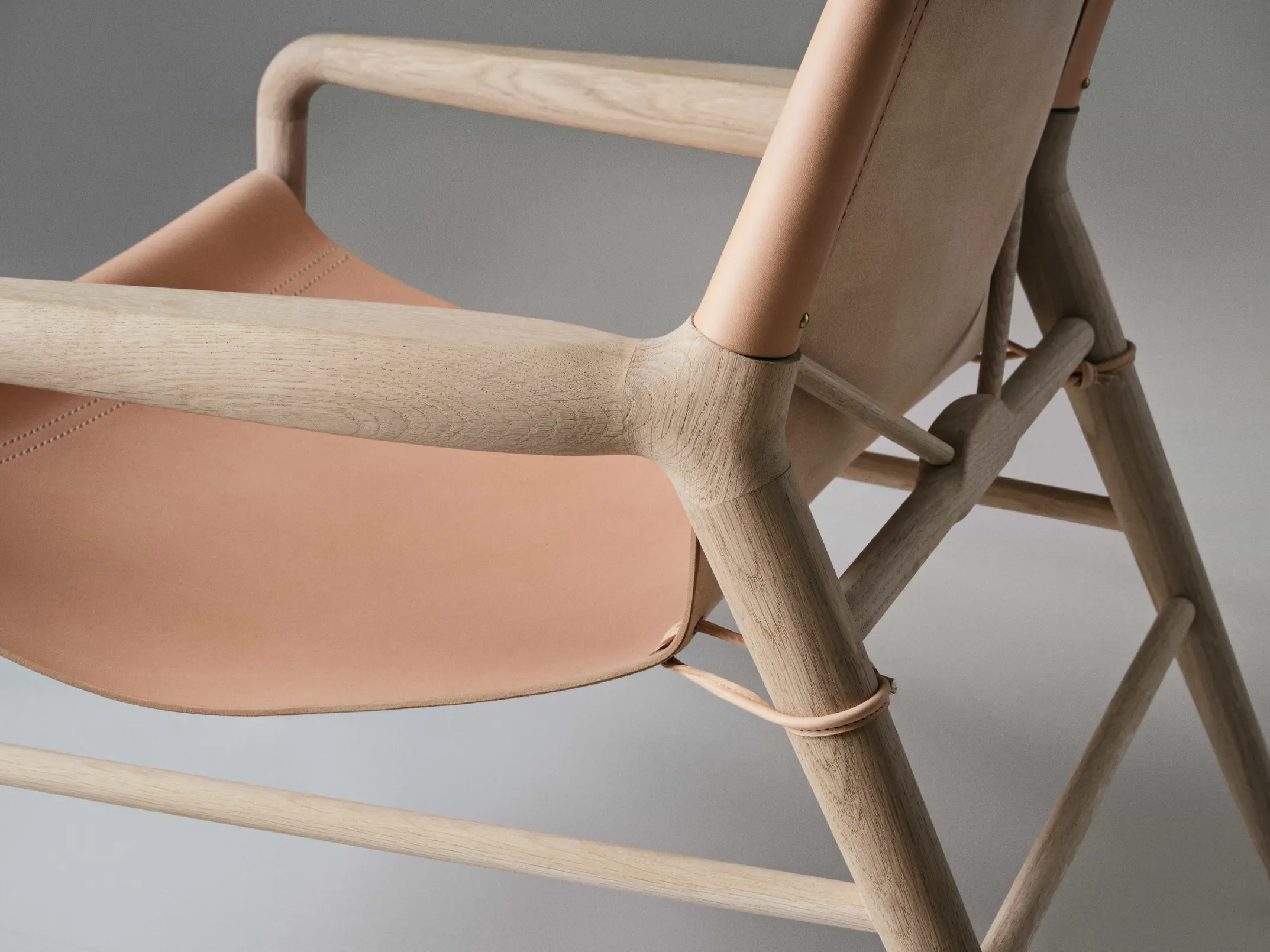
The Rama chair by OX Denmarq is a handmade Danish lounge armchair designed by co-founder Dennis Marquart, pairing a soaped oak frame with a seat in thick, vegetable-tanned leather.
For the Nordic specifier, budgetary concerns usually outweigh romantic ones. Products rarely fail in tender for lack of taste. They fail at the point where the specified piece meets the price, and the standard solution is a compromise that nobody really wanted. A brand making handmade, customisable Danish furniture at affordable prices is not a sentimental proposition. It is a practical one. The other thing Marquart will tell you is that leather and stone are meant to take marks, and that his products are even better after ten years. Specify well, and the value stays in the room instead of moving to the saleroom.
Oxdenmarq products and services are now available through Sirus Concepts in Norway starting August 2026.
Editors Picks
Author

Owen Wray
Founder Sirus Concepts