
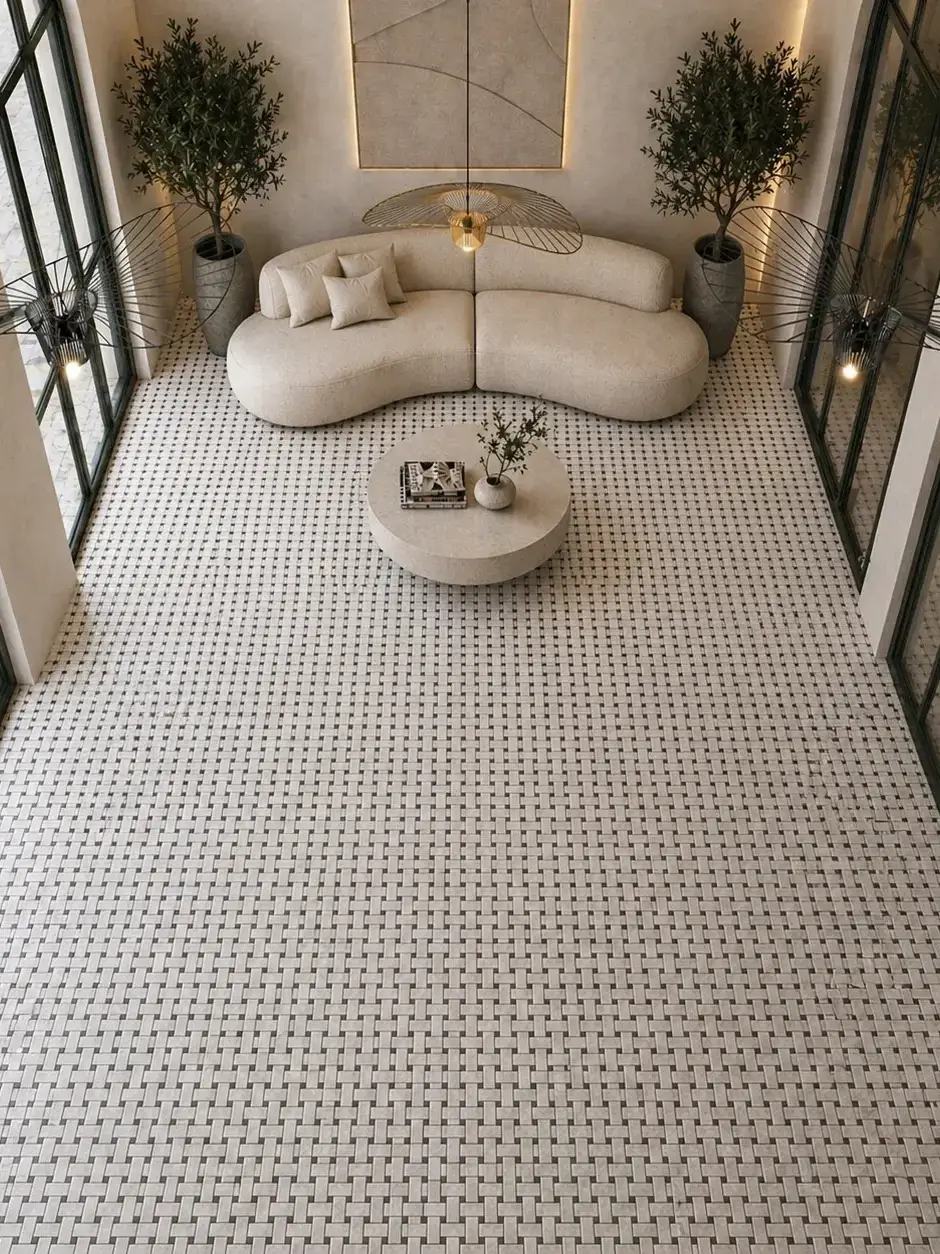
There is a moment in every bathroom renovation when someone, usually the person paying, asks whether anyone will really notice the floor. It is a reasonable question with a rather inconvenient answer: no one notices it consciously, yet everyone notices it completely.
Surfaces are the part of a room you don’t so much look at as live against, underfoot, at the basin, by the tap, and a cheap one announces itself daily, quietly, for years. This is the unglamorous truth the better material brands understand.
Copenhagen’s Nordst has built on it more literally than most. Their new Marble Mosaic Collection is an exercise in taking natural stone seriously: precision-cut tiles and mosaics in patterns that reward a second glance rather than demanding one. The premise is refreshingly old-fashioned. The right material, chosen with care, does more for how a room feels than any amount of clever joinery, and it ought to be specified as an investment rather than a season’s mood.
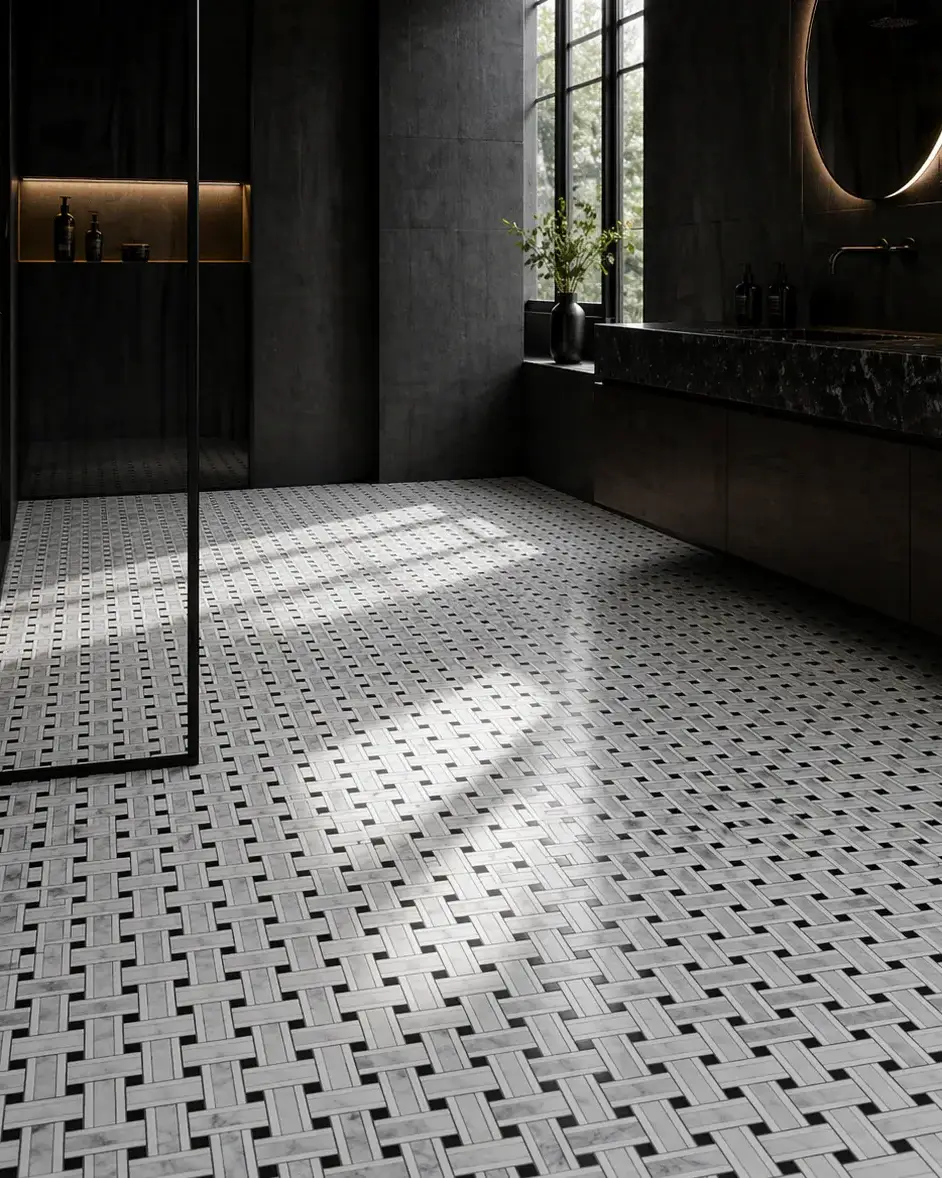
Vali combines the deep charcoal elegance of Black Marquina marble with the luminous warmth of Oriental White marble in an intricate woven pattern.
The range is where it earns its keep. The mosaics are named after the Norse pantheon. Vali is a woven pattern marrying charcoal Black Marquina to luminous Oriental White in a honed, slip-resistant finish, the sort of detail a specifier loves precisely because the client will never think to ask about it until the day it matters. Heimdall sets those same Oriental White and Black Marquina accents for a strong architectural rhythm; Nanna takes the traditional, high-contrast route with Italian Carrara and Black Marquina, equally at home on a floor or a wall; Tyr is the bold one, a deep burgundy Rosso Levanto cut against crisp white Carrara. Alongside them sit the Inverted Flute tiles: ribbed stone profiles in White Carrara, Calacatta Viola or Beige Travertine that turn a flat backsplash into a study in light and shadow.
The craft underneath is simply good stone, seriously handled. The slabs are worked at Nordst’s production in Cascais, on the coast west of Lisbon, where we spent time in 2025 watching the process run its full length: multi-ton blocks of raw marble at one end, the finished, palm-sized mosaic pieces and beautiful vanities at the other. It is a quietly humbling thing to see. Marble’s appeal has always been its refusal to repeat itself, and no two slabs of Calacatta Viola carry the same veining, which means a Nordst product is, in the literal sense, unrepeatable. That variation is the whole point, the character a printed porcelain look-alike spends its entire life failing to imitate. It is also, not incidentally, why these surfaces tend to outlast the rooms built around them.
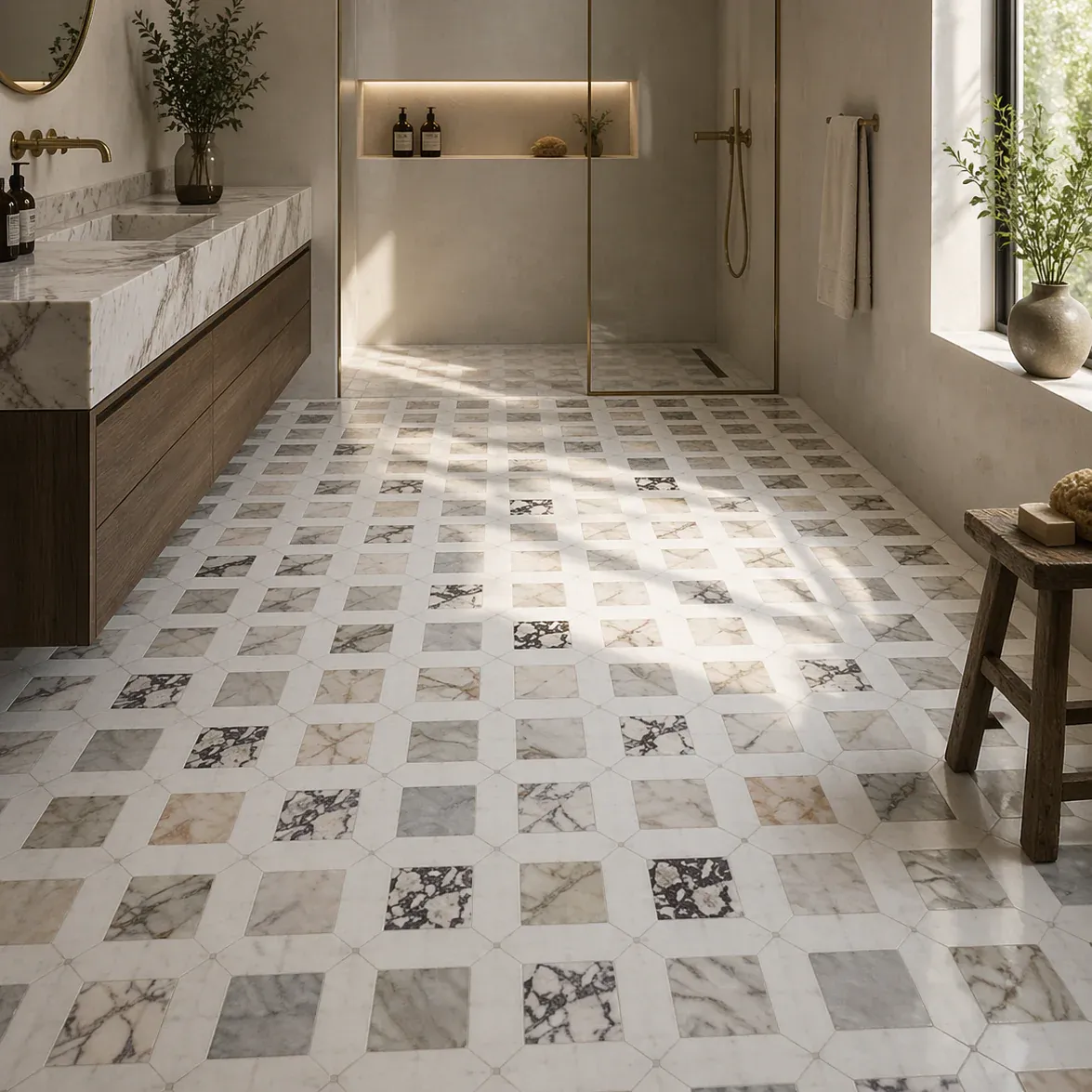
Frigg blends premium Italian and Oriental white marbles in a harmonious composition that showcases the unique character of each stone.
For the Nordic specifier, the fit is almost too neat. A Danish house cutting Italian and Spanish stone in Portugal into mosaics named for Norse gods is, if nothing else, committed to the idea that a surface should still look considered long after the trend that prompted it has been quietly forgotten. Choose stone, and you are choosing for the next tenant too.
Author

Owen Wray
Founder Sirus Concepts